All Categories
Featured

Steps to Initiate Insolvency Under 2026 Laws
Table of Contents
Bankruptcy is a scary concept to numerous, but for those caught in difficult monetary circumstances that involve heavy debt, bankruptcy can also be a practical choice to gain a new start. Bankruptcy is frequently triggered by monetary difficulty. Those filing merely can't manage to handle unanticipated major expenditures, such as medical expenses.
Is Chapter 7 the Relief in 2026?
Peaks in insolvency petitions typically represent financial decline, and states with less consumer-friendly laws normally have a greater rate of filings. Customers might think about financial obligation combination alternatives debt management plans, debt consolidation loans and financial obligation settlement as alternatives to avoid declare bankruptcy. Personal bankruptcy filings dropped during the pandemic as federal aid helped individuals pay their bills.
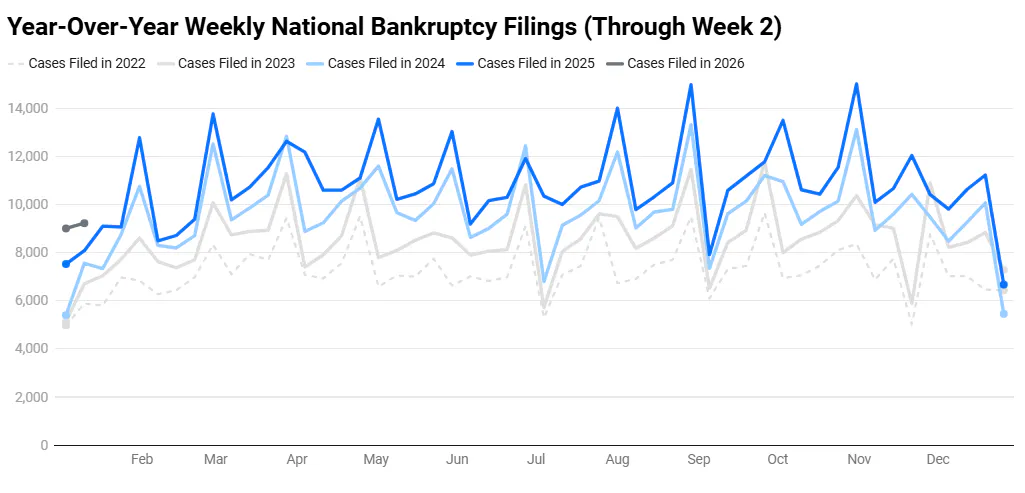
There were 574,314 personal bankruptcy cases filed in 2025, including both individual and organization cases, according to U.S. Insolvency Courts statistics. That's an 11% boost from the 517,308 submitted in 2024 and a 26.8% increase from the 452,990 filed in 2023. In 2022, 387,721 personal bankruptcies were submitted in the U.S. The general numbers stay below pre-pandemic levels, but the constant boost reflects continued financial pressure on families and organizations.
Estimating Bankruptcy Lawyer Fees in 2026
Courts data, which covers the 12-month duration ending March 31, 2026, reveals the pattern continued into 2026. For the 12-month period ending March 31, 2026, insolvency filings rose to 591,850, an 11.9% boost from 529,080 throughout the year ending March 31, 2025. Business filings increased to 25,960, while nonbusiness filings increased to 565,890.
"Debt loads are broadening as the costs of products and services have gone up with inflation and the cost of loaning continues to increase. While pandemic relief efforts have actually largely ended, the safe haven of insolvency is continuously offered for financially distressed companies and consumers." Personal bankruptcy filings hit an all-time high in 2005, with more than two million cases.
The list below year, bankruptcy filings dipped to about 600,000, the lowest point in twenty years at the time. The decrease followed the Insolvency Abuse Prevention and Consumer Defense Act of 2005 (BAPCPA) was enacted. It made major modifications to the bankruptcy code, consisting of presenting the methods test for Chapter 7 filings.
The last several years reveal the remaining impact of the pandemic and how relief aid helped suppress filings, followed by a constant rebound as relief programs expired and home debt pressures increased. By 2020, filings had actually dropped 30%.
Courts Bankruptcy filings can be personal or business-related. Personal filings occur when an individual can not pay their costs and is swamped with financial obligation. Organization filings take place when a service is in a financial bind, be it a large retail outlet or a mom-and-pop shop. The huge bulk of bankruptcies are filed by customers and not by businesses.
Long-Term Consequences of Filing in 2026
In 2025, company filings accounted for about 4.3% of all insolvency cases. Here's a take a look at the variety of service vs. personal bankruptcies over the previous 8 years. Personal Bankruptcy Filings the Last 8 Years Organization Non-business Overall 24,737 549,577 574,314 23,107 494,201 517,308 18,926 434,064 452,990 13,481 374,240 387,721 14,347 399,269 413,616 21,655 522,808 544,463 22,780 752,160 774,940 22,232 751,186 773,418 Source: U.S.
The majority of individual insolvencies are Chapter 7 or Chapter 13; most businesses submit Chapter 7 or Chapter 11, but all three can be utilized in either case, depending upon the financial scenarios of the individual or service. In Chapter 7, inessential possessions are offered (for the most part, this does not include your home) and the cash raised is utilized to discharge debts.
A little company is more likely to submit Chapter 7 than Chapter 11. Chapter 11 enables a business to continue operating as its financial institutions are paid and it is restructured.
It's often utilized by people whose debt is too expensive for Chapter 13 (believe professional athletes and motion picture stars). The goal of any insolvency is to have debts discharged, which offers you a new start to right your financial ship. Here is a look at the number of insolvencies by many common chapters in the past 8 years: YEAR Chapter 7 Chapter 11 Chapter 13 342,465 personal14,259 business 542 personal8,659 company 206,570 personal1,319 company 298,049 personal12,582 business 428 personal8,456 business 195,724 personal1,520 business 251,048 personal10,229 organization 386 personal7,070 business 182,630 personal1,326 business 217,727 personal7,728 business 453 personal4,465 business 156,060 personal1,027 business 279,649 personal8,678 business 470 personal4,366 service 119,150 personal852 company 367,034 personal11,919 service 547 personal7,786 business 155,227 personal1,150 organization 465,991 personal14,215 company 968 personal6,052 organization 285,201 personal1,778 service 461,897 personal13,678 service 1,017 personal6,078 business 288,272 personal1,874 organization Source: U.S.With an estimated population of about 11.3 million, Georgia had approximately 285 bankruptcy filings per 100,000 locals. At the other end of the spectrum, Alaska had among the fewest filing overalls in 2025, with 244. With an estimated population of about 737,000, the state had about 33 bankruptcy filings per 100,000 locals.

Latest Posts

Long-Term Consequences of Declaring Bankruptcy in 2026

Is Chapter 7 Best for Your Needs?

Steps to Navigate a 2026 Bankruptcy Case